Matterhorn, 4,478 m
18.08.2025 · Zermatt, Switzerland · Northeast Ridge · Solo,
The Mountain
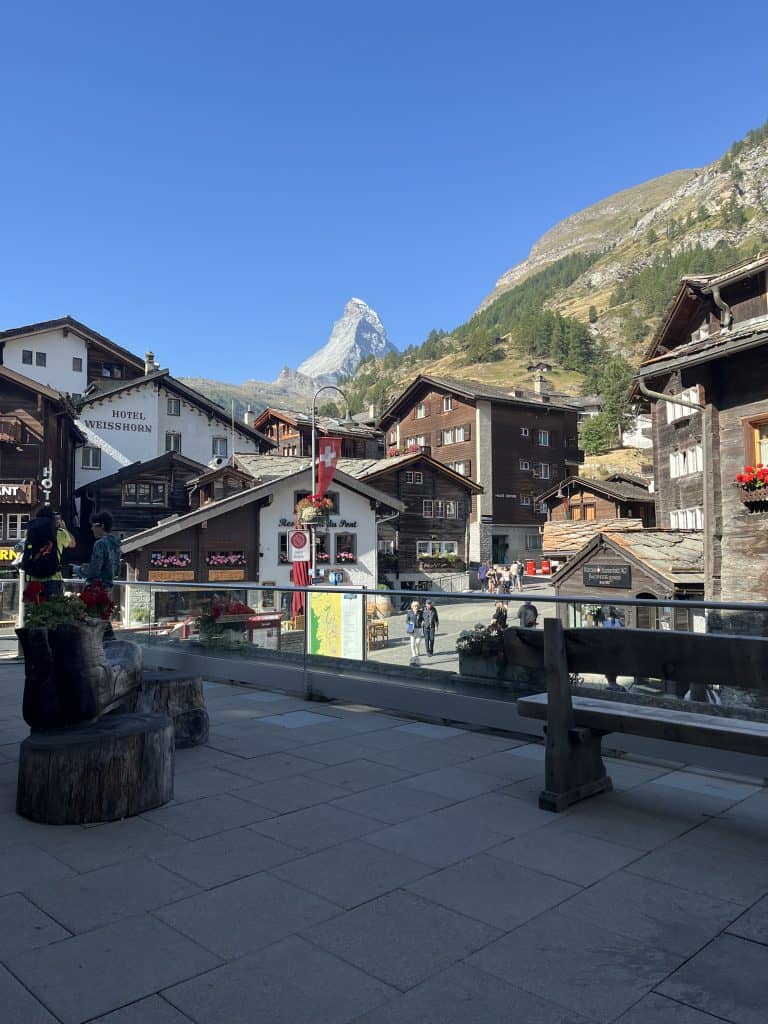
The Matterhorn doesn’t need much of an introduction. Standing at 4,478 metres on the Swiss-Italian border, its near-vertical faces rise into a perfect pyramid. A shape so recognisable it has become the unofficial symbol of the Alps and one of the most photographed mountains in the world.
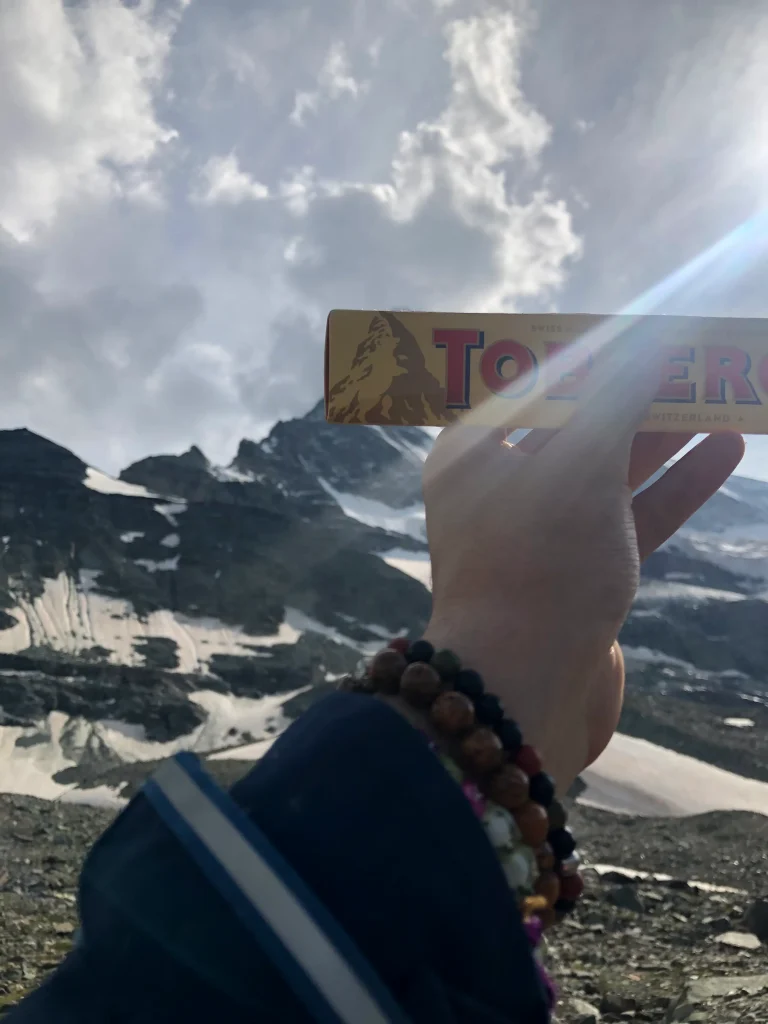
My connection to it is older than my connection to climbing. When I was a kid, my dad brought home a large Toblerone. That triangular chocolate bar with the mountain on the packaging lodged itself somewhere in my mind long before I ever owned a harness. Small moments can have disproportionate consequences. I fell in love with climbing, and somewhere underneath that love was the unconscious image of a mountain on a chocolate wrapper.
I never really made a deliberate decision to climb it. It was just always there, in the background, waiting.
ROUTE AT A GLANCE
The Hörnli Ridge (northeast face) is the classic line. The most frequently attempted route on the mountain, graded AD+ (Assez Difficile Plus). It involves 1,220 m of vertical gain from the hut, exposed ridgeline scrambling, rock steps up to UIAA grade III+, fixed ropes, and mixed terrain of rock, snow, and ice on the upper mountain. About 3,000 people attempt it each summer season.
*For route information and conditions, visit zermatt.ch or sac-cas.ch.
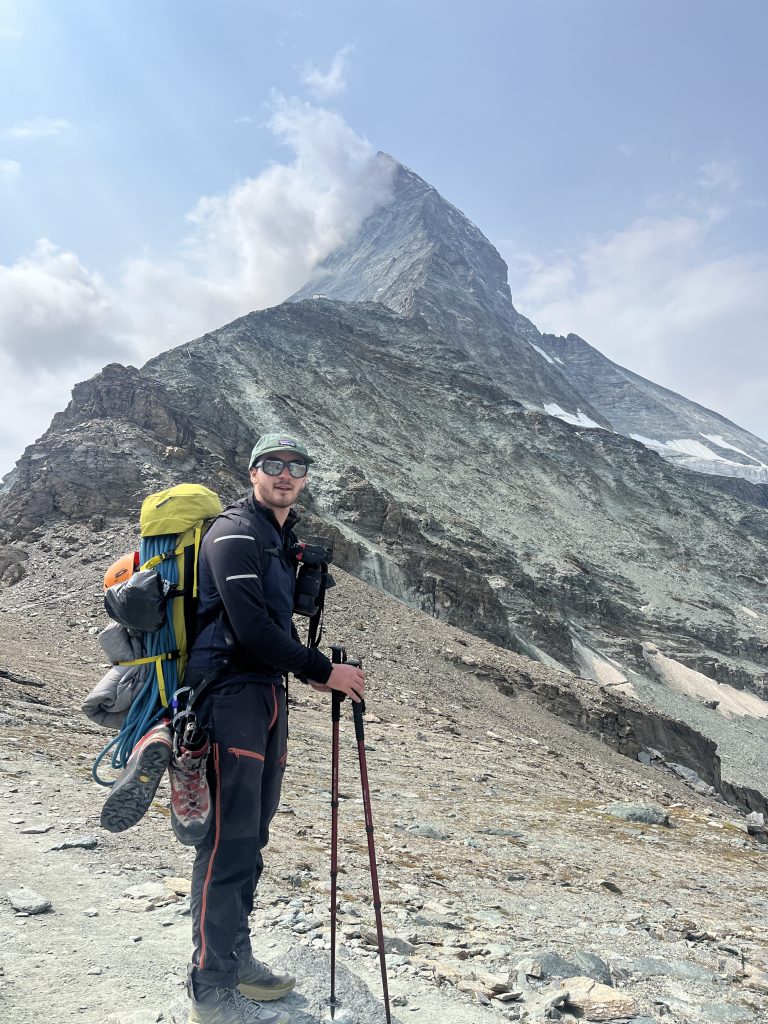
2021, 2023, 2024 and 2025
2021 ~ No gear, a backpack, and a promise
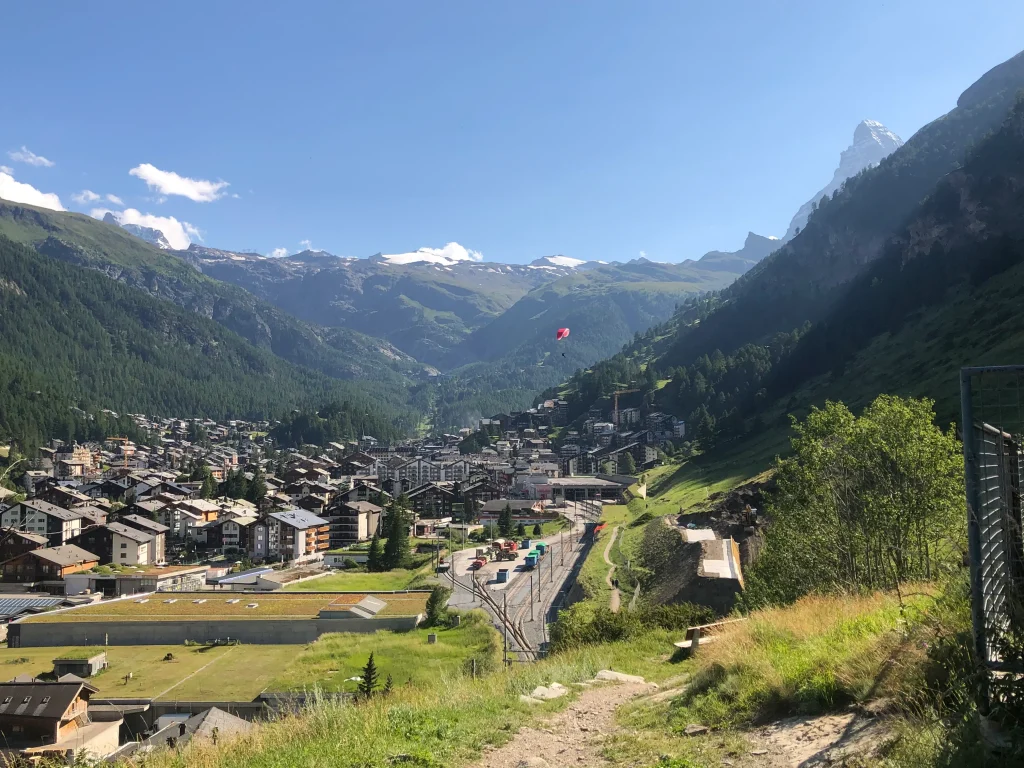
My first visit to Zermatt happened in the summer of 2021, during a break before heading back to Istanbul. I packed a bag, visited my Polish family in the south first, and then started hitchhiking toward Zermatt. Four days, countless kilometres, and a series of generous strangers later . I arrived. I was 22 years old.
I had no proper climbing equipment. Not even a harness. I looked into rentals. I looked at the prices. I quickly reconsidered. (A note for future travellers: Switzerland is expensive. Zermatt is three times Switzerland)
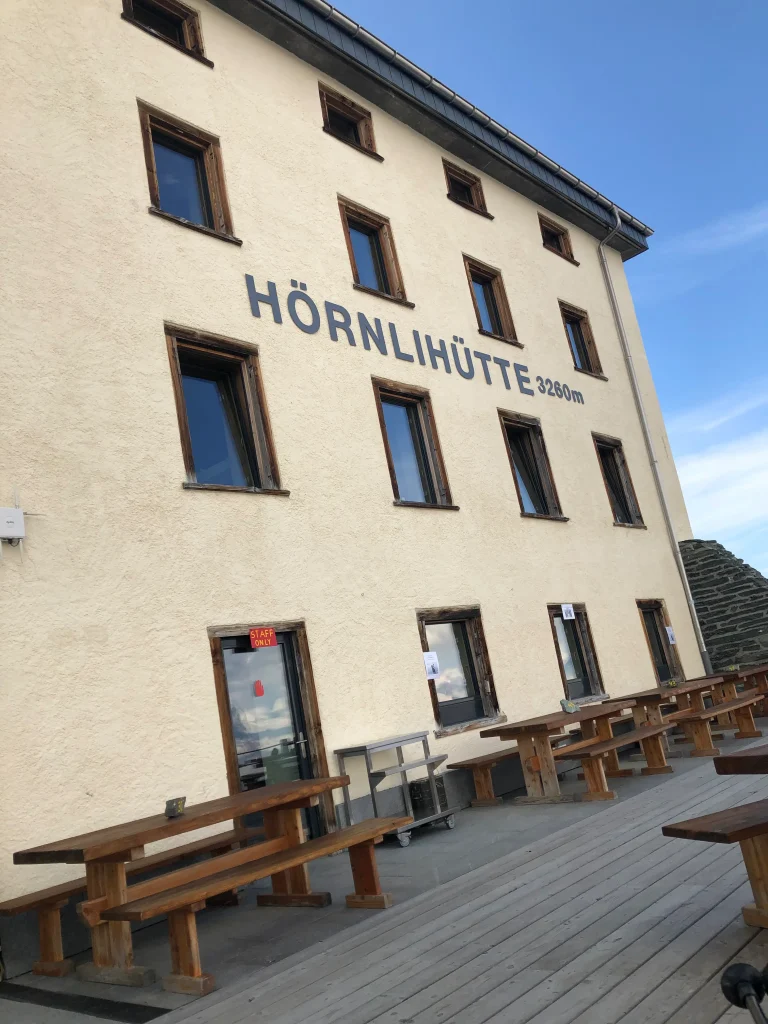
Instead, I hiked to the Hörnlihütte at 3,260 m with what I had. The hut sits directly below the northeast face, and from its terrace the Hörnli Ridge fills the entire sky above you. I stood there, looked up, and made a quiet promise to myself.
2023 ~ Attempt that ended at 4,003 m
July 2023. I returned with proper equipment, proper experience, and a proper plan. Everything went well until somewhere below the Solvay Hut at 4,003 metres, I made an honest assessment: too much weight in my pack, not enough water, and I was already getting tired. At altitude, these aren’t minor inconveniences. They’re the kind of mistakes that can end a climb.
I turned around. It wasn’t the decision I wanted to make, but it was the right one. Part of what climbing teaches you, slowly, through experience, is that the mountain doesn’t reward stubbornness. It punishes it.
On the descent I met two climbers, Julien and Patrice (sending my best regards). A small incident happened on the way down, nothing serious, but enough to mark the day. A record of an unfinished conversation with the mountain.
2024 ~ Close, but not close enough
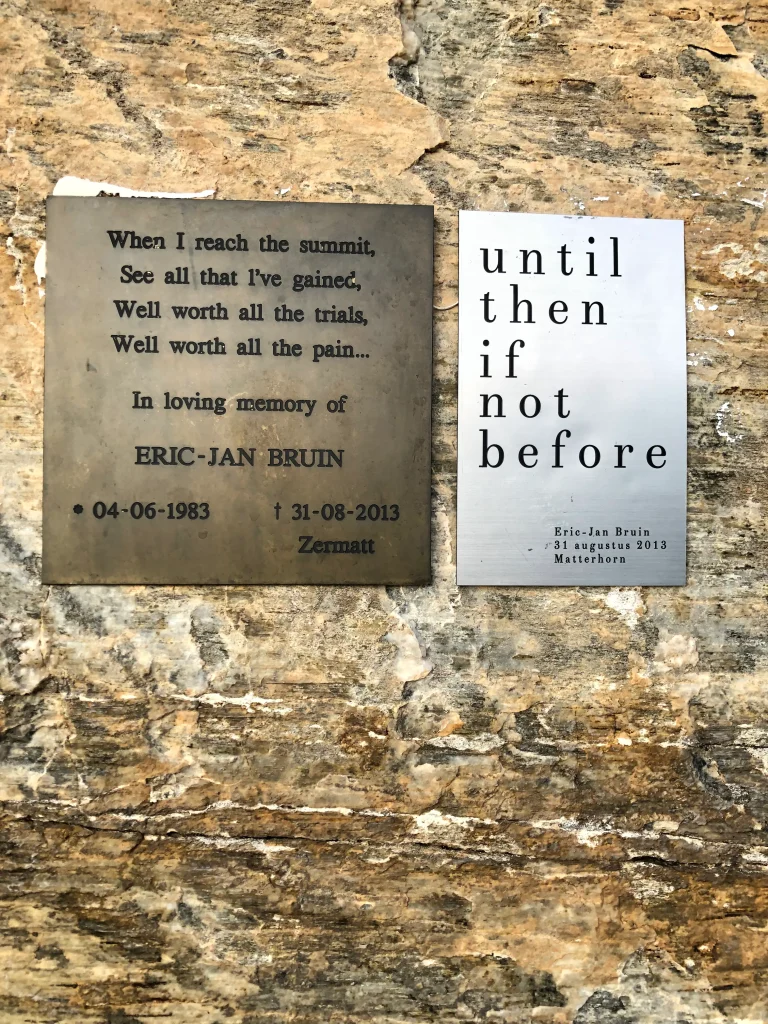
I planned my vacation weeks ahead of time around a weather window. The day before arriving in Zermatt, conditions looked good. The day I planned to climb, it rained heavily. That week, three climbers died on the mountain.
I didn’t climb Matterhorn. I did the Breithorn traverse and Pollux instead.
2025 ~ 17th August
On 17th August, from Schaffhausen I took the first train to Zurich, then a series of connections south through the Rhône valley to Zermatt. Zermatt is a car-free village, no private vehicles allowed. You arrive by train and the village moves on foot and by electric taxi. There are 38 peaks above 4,000 m in the region.
After arriving and doing a quick shop, I took the gondola to Schwarzsee, hiked to Hörnli Hut, enjoyed the view, called some friends, and found a sheltered spot to leave my unnecessary gear.
The Hörnli Hut is the standard base for the Hörnli Ridge: hot food, bunk beds, roughly 150 CHF per night including half-board, capacity for about 170 people. I didn’t stay there for two reasons.
First, the cost. Second, the hut operates a clear priority system: Swiss mountain guides and their clients eat first and get the earliest starts. Solo climbers without guides eat last and leave later to avoid congested sections on the route. Every hour counts, and I didn’t want to start the climb any later than necessary. I did an acclimatisation lap climbing a few hundred metres above the hut, then settled onto a comfortable rock for the night. Camping is restricted in the alpine zone, but a solo climber on the approach path is unlikely to have problems.
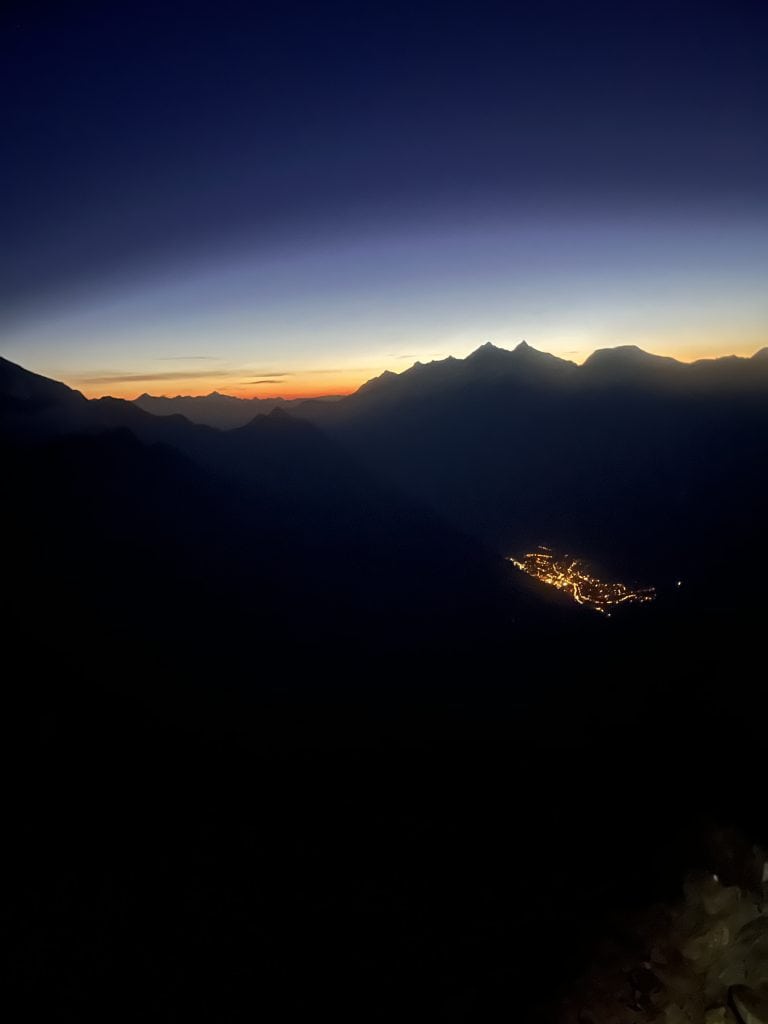
Around 8 PM: final gear check, had dehydrated food and tea, and tried to sleep. I woke up every hour. Didn’t get a proper sleep, but the view was extraordinary.
4:00 AM ~ Setting out
Half excited, half exhausted. Oatmeal and tea first, on a 9–12 hour day at altitude, starting with a warm stomach matters. By 4:30 AM I was moving. From the mountain, I could already see the hut coming alive below me. That morning roughly 100 guide-client pairs were attempting the summit. A column of headlamps snaking up the lower ridge. I let them go ahead and set my own pace.
Wind was almost zero. Temperature cold but manageable. A clear sky all day, genuinely relieving. The Alps are known for weather that turns within minutes, and the Matterhorn demands a real window, not just optimism.
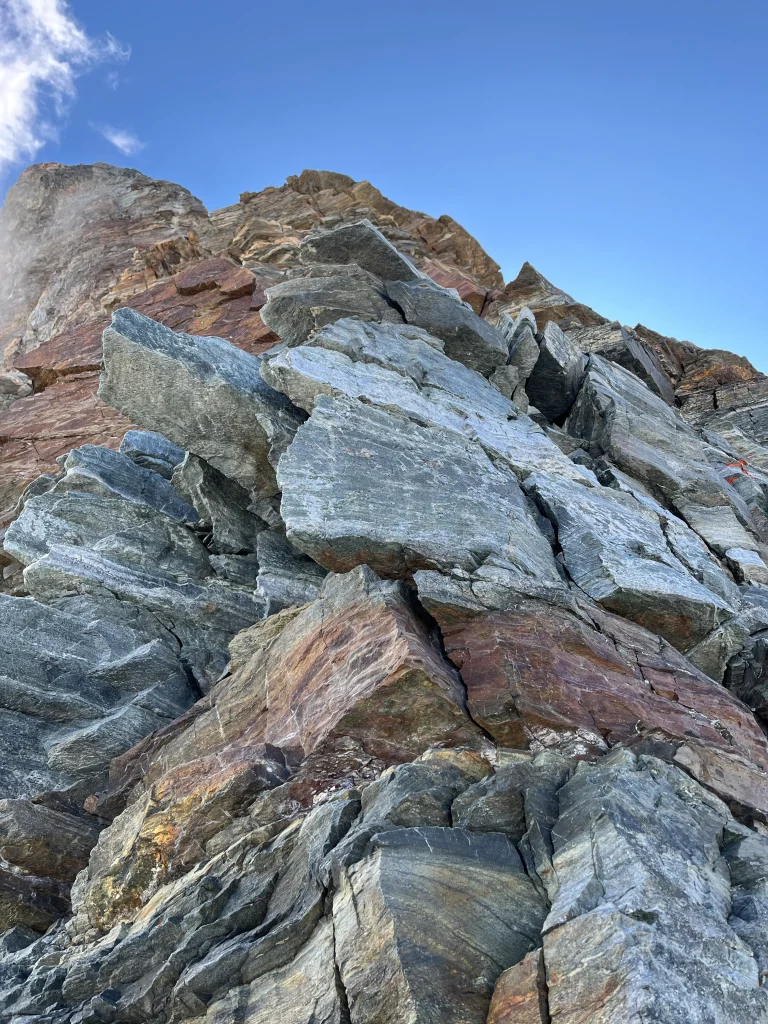
The lower ridge ~ two hours in the dark
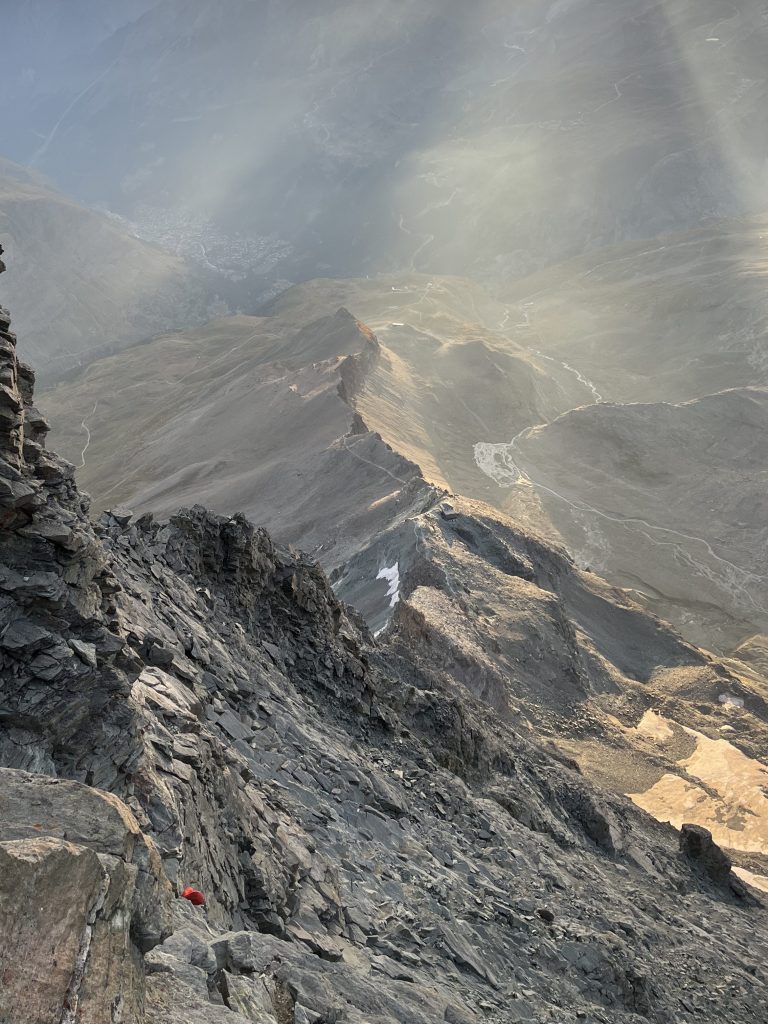
Two hours of climbing before the light came. The lower Hörnli Ridge is moderate scrambling on broken rock. Good handholds, solid footing in dry conditions, but the exposure is immediate. The east and north faces drop away on either side. You’re on a true ridge from the very first steps.
Around 6:00 AM, below the Solvay Hut, the light started to creep in. The rock changed colour, black to amber to gold. I took a few seconds to look at it properly. Not a rest stop. Just a moment of proper attention.
On the lower sections guided teams overtook me in places. On a narrow ridge there isn’t always room to pass cleanly, and as a solo climber I was extra cautious of everything around me. Not just my own movement. I used the fixed bolts to clip in during brief pauses, both for safety and to let teams through without breaking either of our rhythms.
Solvay Hut ~ 4,003 m
Three hours in, I reached the Solvay Hut at 4,003 m, the emergency hut, positioned about a third of the way up the technical section. The last time I was at this exact spot, I turned around. This time I stopped briefly, ate, drank, and kept going.
Above Solvay ~ mixed terrain, fixed ropes, ice
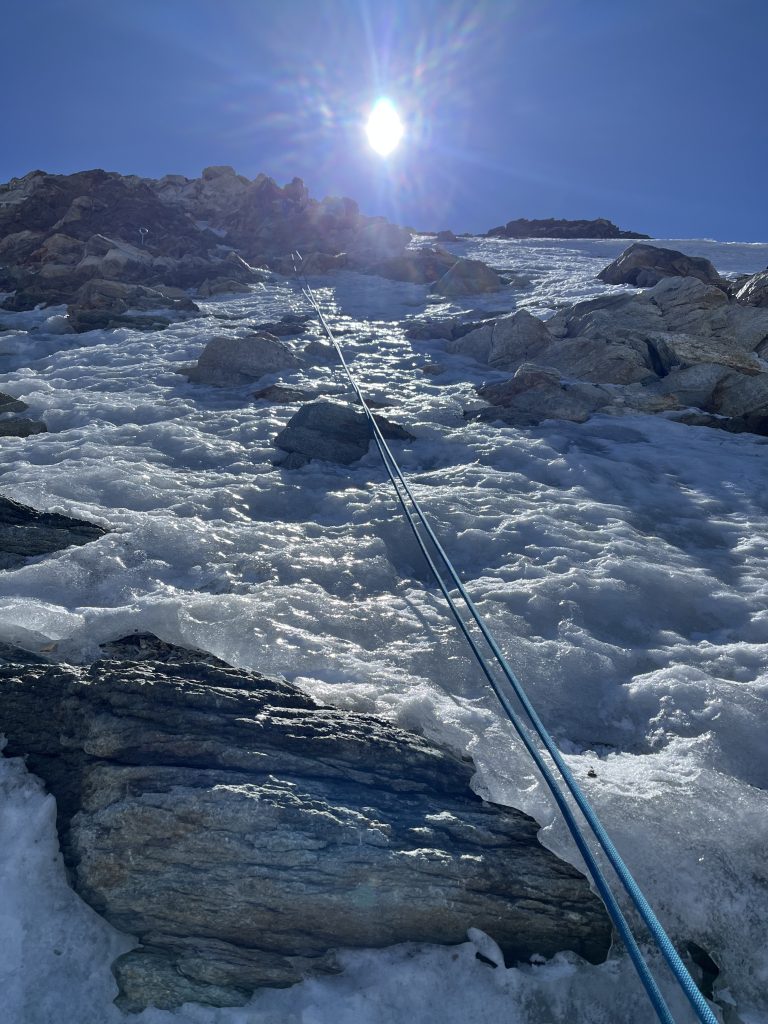
Just above the hut, crampons on, ice axe out. The route transitions from rock scrambling to mixed terrain. Steep snowfields where a slip could send you a very long way in a very bad direction. I have never been more focused on each individual step than on this section. Ice-covered rock requires a completely different quality of attention than dry scrambling.
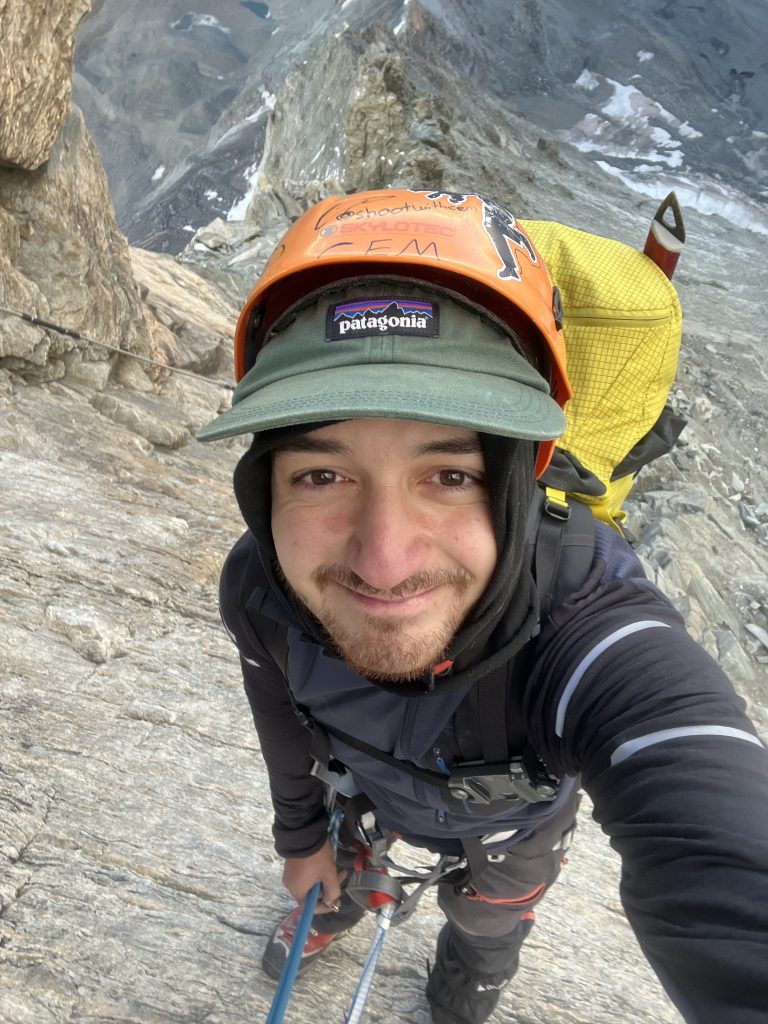
The fixed ropes on the upper mountain are thick, anchored at intervals of 20–30 metres. I clipped in with prusik loops and moved methodically through each section. Getting lost on the Matterhorn is genuinely dangerous. Its maze of ridges and faces disorients even experienced climbers, and the consequences of a navigation error are severe.
The wind was freshening as I climbed higher. Below me, ropes of descending climbers began to appear. Teams that had summited earlier heading back down. Two-way traffic on a narrow ridge adds its own complexity.
13:00 ~ The summit
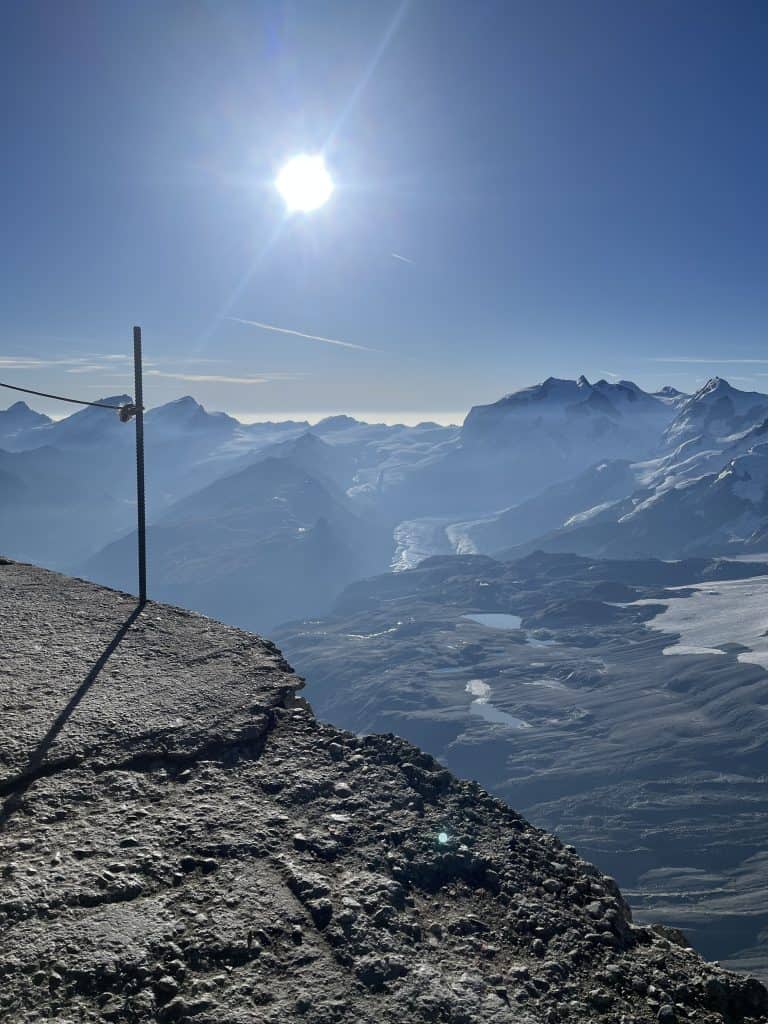
Shortly before the Swiss summit, the bronze statue of Saint Bernard appeared ahead of me. A few more metres. And then the summit itself: a narrow rocky crest, perhaps 15 metres long. Yeeyh! In every direction: the Monte Rosa massif, the Bernese Oberland, the Italian Alps south toward Cervinia. Perfect visibility. I took out my camera. I took photos.
I stayed 30–40 minutes. Long enough to eat, drink, recover slightly, and to truly experience being there. Not so long that the afternoon weather window would start to close.
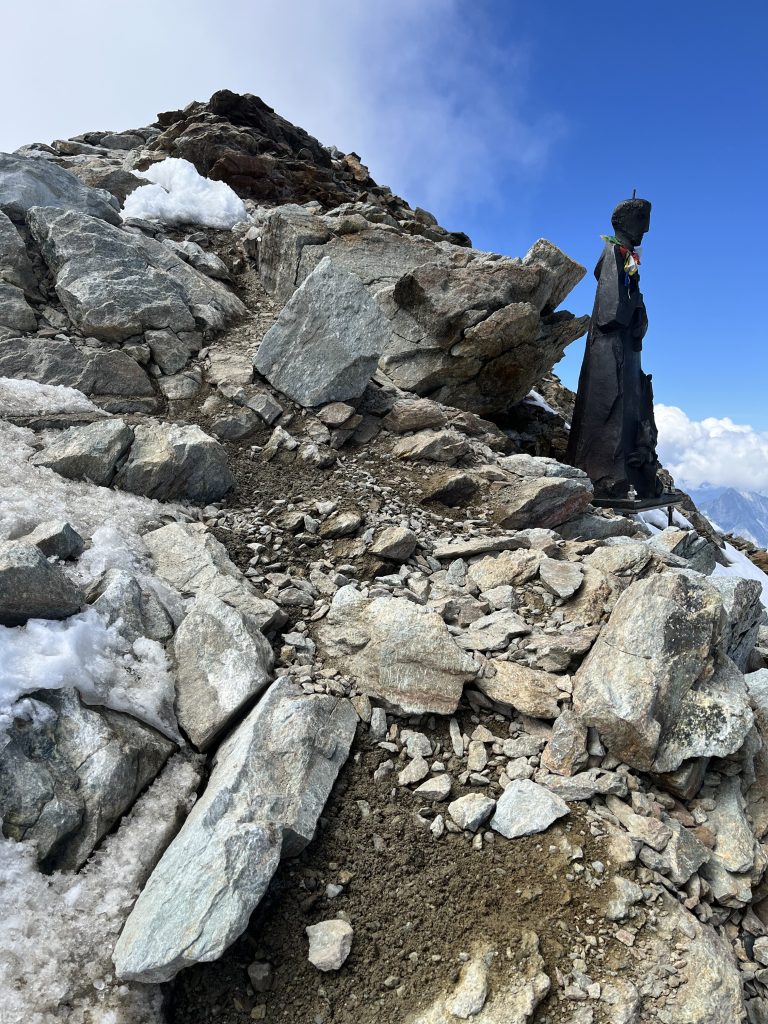
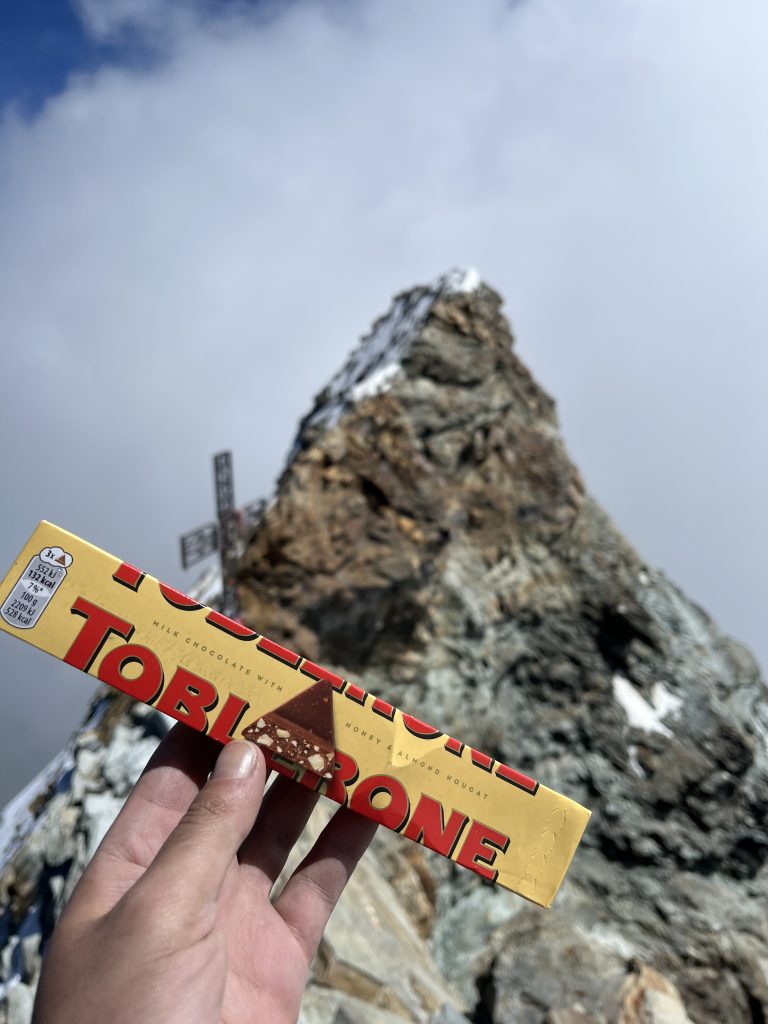
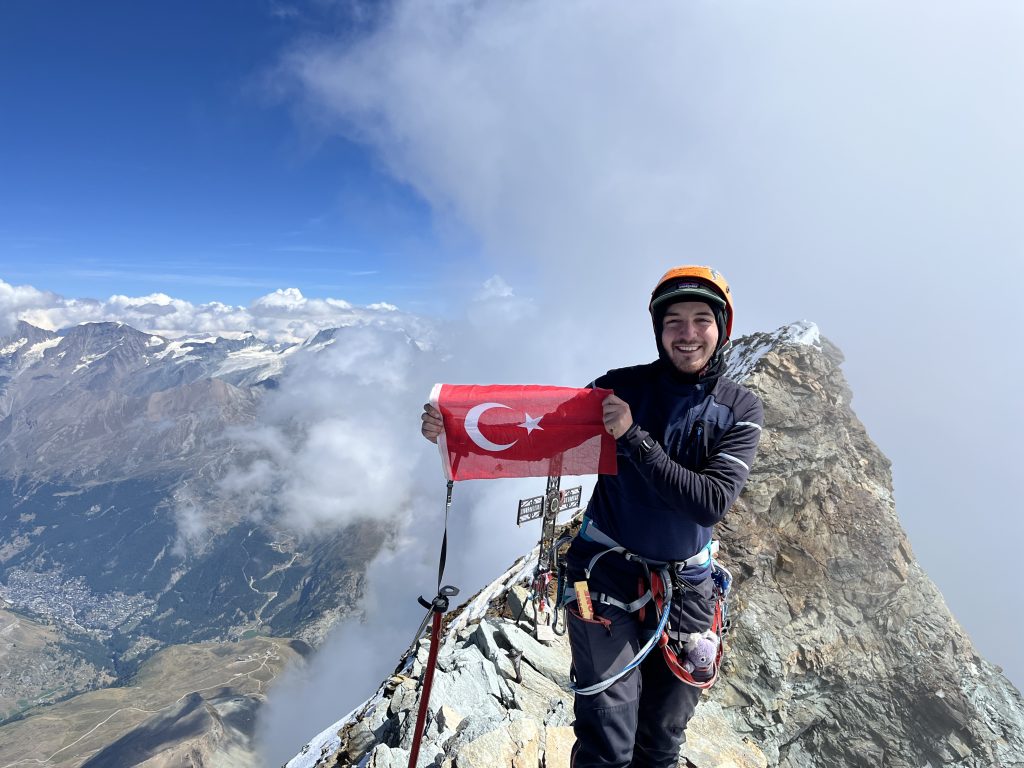
The descent ~ harder than expected
There’s a reason 80% of mountaineering accidents happen on the descent. You’re fatigued. Physically from the exertion, neurologically from hours at altitude. Your legs, well trained for upward movement, are less naturally suited to down climbing. The same sections that felt reasonable on the way up look different when you’re tired, looking down, and time pressed.
The Matterhorn descent confirmed all of this. I kept thinking: this is steeper than I remember coming up. This is harder. The fixed ropes demanded just as much attention as the ascent, perhaps more, because fatigue was now a factor.
On the steeper upper sections, I used my 60 m rope to abseil. This was the right decision, and the entire reason I’d carried it despite the weight. Each abseil meant rigging an anchor, threading the rope, controlling the descent, then retrieving it. Slow, deliberate, safe. The rope jammed a few times. I worked it free each time without rushing. Rushing a stuck rope at altitude in fading light is not an option. After a while, I didn’t have the strength left to keep pulling the rope up each time. I continued down without it, a bit riskier since I couldn’t always see the footholds, but faster.
The plan had been to descend fully to the Hörnlihütte. By the time I reached the shoulder section, the light and my energy made this clearly unrealistic. Around 20:00, I arrived back at the Solvay Hut. I ate the last of my figs, took a few sips of the remaining water in my bottle, and lay down.
Two Polish climbers I met on the descent were also in the hut. Seeing familiar faces after a long solo day on a serious mountain produces a specific kind of relief that is difficult to describe. We didn’t talk much. We didn’t need to.
Back to Zermatt
I woke at 6:00 AM, still tired in that deep way that comes after sustained effort. The view from the Solvay Hut in the early morning, surrounding peaks emerging from shadow while the valley far below was still dark, was the best wasted view of the trip, because I was too tired to properly appreciate it.
Solvay to the Hörnlihütte took about two hours. At the hut I paid 9–10 CHF for a bottle of water. It was the best value I have ever spent in my life. I contacted my family and friends to confirm I was safe, then descended the trail to Schwarzsee and took the gondola back to Zermatt.
In Zermatt, I grabbed something to eat and took one last look at the Matterhorn before leaving the village. Then a train back to Schaffhausen.
Gear
I used a 30-litre alpinist pack. On a technical route at high altitude, every unnecessary kilogram costs you more than just the effort of carrying it.
- Crampons
- Ice axe
- Helmet
- 60 m rope
- Harness
- Slings & carabiners
- Quickdraws
- ATC guide belay device
- Climbing gloves
- Trekking poles
- First-aid kit
- UV 400 sunglasses
- High-SPF sunscreen
- Headlamp + spare batteries
- Power bank
- Dehydrated food & oats
For clothing I won’t go into exhaustive detail. It depends entirely on conditions. I wore standard climbing layers with merino wool base layers wherever possible.
Was It Smart to Climb Alone?
Definitely Not. There are sections of the Matterhorn where a fall means the end. There’s no rope partner to catch you, assist with navigation, or help in an emergency. Every decision is yours alone.
I wouldn’t recommend solo climbing to anyone without serious prior experience on Alpine terrain. And I won’t pretend that carrying a rope changes the fundamental reality: on certain sections of this mountain, the margin for error is narrow enough that solo is a statistically riskier choice than climbing with a competent partner.
The quality of attention that solo climbing demands produces an experience that’s categorically different from climbing with others. You are entirely responsible. You are entirely present. The mountain communicates differently when there is no one else to talk to.